Showing posts with label Article. Show all posts

Thursday, June 22, 2017

National Pet Preparedness Month

June is National Pet Preparedness Month! 
This is the perfect time to get your pets ready in case a disaster hits.
Unfortunately, many pets get separated from their families during disasters, which is why it is essential to plan for them when preparing for emergency situations.

Follow these pet preparedness tips from Ready.gov.
  • Include your pets in your emergency plans
  • Build a separate emergency kit for your pets
  • Make sure to keep digital records and/or pictures to identify your pet after a disaster in case you become separated
  • Create a list of places that accept pets if an emergency happens


When preparing your emergency plan:
  • ID your pet. Make sure your pet's tags are up-to-date and securely fastened to your pet's collar. If possible, attach the address and/or phone number of your evacuation site. If your pet gets lost, his tag is his ticket home. Also consider microchipping your pets.
  • Make sure to have a current photo of your pet for identification purposes.
  • Make an emergency kit. You can find a full item list here.
  • Identify shelters. For public health reasons, many emergency shelters cannot accept pets. Find out which motels and hotels in the area you plan to evacuate to allow pets well in advance of needing them. There are also a number of guides that list hotels/motels that permit pets and could serve as a starting point. Include your local animal shelter's number in your list of emergency numbers.
  • Make sure you have a secure pet carrier, leash or harness for your pet so that if he panics, he can't escape.

During the disaster:
  • Bring your pets inside immediately.
  • Have newspapers on hand for sanitary purposes. Feed animals moist or canned food so they will need less water to drink.
  • Animals have instincts about severe weather changes and will often isolate themselves if they are afraid. Bringing them inside early can stop them from running away. Never leave a pet outside or tied up during a storm.
  • Separate dogs and cats. Even if your dogs and cats normally get along, the anxiety of an emergency situation can cause pets to act irrationally. Keep small pets away from cats and dogs.
  • In an emergency, you may have to take your birds with you. Talk with your veterinarian or local pet store about special food dispensers that regulate the amount of food a bird is given. Make sure that the bird is caged and the cage is covered by a thin cloth or sheet to provide security and filtered light. 
  • If you evacuate your home, DO NOT LEAVE YOUR PETS BEHIND! Pets most likely cannot survive on their own and if by some remote chance they do, you may not be able to find them when you return.
  • If you are going to a public shelter, it is important to understand that animals may not be allowed inside. Plan in advance for shelter alternatives that will work for both you and your pets; consider loved ones or friends outside of your immediate area who would be willing to host you and your pets in an emergency.
  • Make a back-up emergency plan in case you can't care for your animals yourself. Develop a buddy system with neighbors, friends, and relatives to make sure that someone is available to care for or evacuate your pets if you are unable to do so. Be prepared to improvise and use what you have on hand to make it on your own for at least three days, maybe longer.

Caring for your pet after the disaster:
  • If you leave town after a disaster, take your pets with you. Pets are unlikely to survive on their own.
  • In the first few days after the disaster, leash your pets when they go outside. Always maintain close contact. Familiar scents and landmarks may be altered and your pet may become confused and lost. Also, snakes and other dangerous animals may be brought into the area with flood areas. Downed power lines are a hazard.
  • The behavior of your pets may change after an emergency. Normally quiet and friendly pets may become aggressive or defensive. Watch animals closely. Leash dogs and place them in a fenced yard with access to shelter and water. 

Tips for Large Animals.

If you have large animals such as horses, cattle, sheep, goats or pigs on your property, be sure to prepare before a disaster.
  • Ensure all animals have some form of identification.
  • Evacuate animals whenever possible. Map out primary and secondary routes in advance.
  • Make available vehicles and trailers needed for transporting and supporting each type of animal. Also make available experienced handlers and drivers. Note: It is best to allow animals a chance to become accustomed to vehicular travel so they are less frightened and easier to move.
  • Ensure destinations have food, water, veterinary care, and handling equipment.
  • If evacuation is not possible, animal owners must decide whether to move large animals to shelter or turn them outside.


Thursday, June 30, 2016

Make a Disaster Plan for Your Pets

From the Humane Society of
the United States.

"How to keep pets safe in natural disasters and everyday emergencies.

The best way to keep your pets safe during an emergency is to keep them with you.

1. Start Getting Ready Now

ID Your Pet
Make sure that cats and dogs are wearing collars and identification tags that are up to date. You'll increase your chances of being reunited with pets who get lost by having them microchipped; make sure the microchip registration is in your name. But remember: The average citizen who finds your pet won't be able to scan for a chip, but they will probably be able to read a basic tag!

Put your cell phone number on your pet's tag.
It might also be a good idea to include the phone number of a friend or relative outside your immediate area - in case you have had to evacuate.

Put together your disaster kit.
Use our checklist to assemble an emergency kit for yourself and your pet.


Find a safe place to stay ahead of time.
Never assume that you will be allowed to bring your pet to an emergency shelter. Before a disaster hits, call your local office of emergency management to see if you will be allowed to evacuate with your pets and verify that there will be shelters in your area that take people and their pets.

Contact hotels and motels outside your immediate area to find out if they accept pets. Ask about any restrictions on number, size and species. Inquire if a "no pet" policy would be waived in an emergency. Keep a list of animal-friendly places handy, and call ahead for a reservation as soon as you think you might have to leave your home.

Make arrangements with friends or relatives.
Ask people outside your immediate area if they would be able to shelter you and your pets - or just your pets - if necessary. If you have more than one pet, you may need to arrange to house them at separate locations.

Consider a kennel or veterinarian's office.
Make a list of boarding facilities and veterinary offices that might be able to shelter animals in disaster emergencies (make sure to include their 24-hour telephone numbers).

Check with your local animal shelter.
Some shelters may be able to provide foster care or shelter for pets in an emergency. But keep in mind that shelters have limited resources and are likely to be stretched during a local emergency.

Plan for your pet in case you're not home.
In case you're away during a disaster or evacuation order, make arrangements well in advance for someone you trust to take your pets and meet you at a specified location. Be sure the person is comfortable with your pets and your pets are familiar with them. Give your emergency caretaker a key to your home and show them where your pets are likely to be (especially if they hide when they're nervous) and where your disaster supplies are kept.

If you have a pet-sitter, they may be able to help. Discuss the possibility well in advance.

2. If you evacuate, take your pet

Rule Number One:If it isn't safe for you,
 it isn't safe for your pets. 
You have no way of knowing how long you'll be kept out of the area, and you may not be able - or allowed - to go back for your pets. Pets left behind in a disaster can easily be injured, lost or killed.

Rule Number Two: Evacuate early.
Don't wait for a mandatory evacuation order. Some people who have waited to be evacuated by emergency officials have been told to leave their pets behind. The smell of smoke or the sound of high winds or thunder may make your pet more fearful and difficult to load into a crate or carrier. Evacuating before conditions become severe will keep everyone safer and make the process less stressful.

3. If you stay home, do it safely

If your family and pets must wait out a storm or other disaster at home, identify a safe area of your home where you can all stay together.


  • Close off or eliminate unsafe nooks and crannies where frightened cats may try to hide.
  • Move dangerous items such as tools or toxic products that have been stored in the area.
  • Bring your pets indoors as soon as local authorities say trouble is on the way. Keep dogs on leashes and cats in carriers, and make sure they are wearing identification.
  • If you have a room you can designate as a "safe room," put your emergency supplies in that room in advance, including your pet's crate and supplies. Have any medications and a supply of pet food and water inside watertight containers, along with your other emergency supplies. If there is an open fireplace, vet, pet door or similar opening in the house, close it off with plastic sheeting and strong tape.
  • Listen to the radio periodically, and don't come out until you know it's safe.

4. After the disaster

Your home may be a very different place after the emergency is over, and it may be hard for your pets to adjust.

  • Don't allow your pets to roam loose. Familiar landmarks and smells might be gone, and your pet will probably be disoriented. Pets can easily get lost in such situations.
  • While you assess the damage, keep dogs on leashes and cats in carriers inside the house. If your house is damaged, your pets could escape.
  • Be patient with your pets after a disaster. Try to get them back into their normal routines as soon as possible. Be ready for behavioral problems caused by the stress of the situation. If these problems persist, or if your pet seems to be having any health problems, talk to your veterinarian.
  • If your community has been flooded, check your home and yards for wild animals who may have sought refuge there. Wildlife can pose a threat to you and your pet. Check out our tips for humanely evicting wildlife.

5. Be ready for everyday emergencies

You can't get home to your pet.
There may be times that you can't get home to take care of your pets. Icy roads may trap you at the office overnight, an accident may send you to the hospital - things happen. But you can make sure your pets get the care they need by making arrangments now:


  • Find a trusted neighbor, friend or family member and give him or her a key. Make sure this backup caretaker is comfortable and familiar with your pets (and vice versa).
  • Make sure your backup caretaker knows your pets' feeding and medication schedule, whereabouts and habits.
  • If you use a pet-sitting service, find out in advance if they will be able to help in case of an emergency.

The electricity goes out
If you're forced to leave your home because you've lost electricity, take your pets with you to a pet-friendly hotel. If it's summer, even just an hour or two in the sweltering heat can be dangerous. If you stay at home during a summer power outage, ask your local emergency management office if there are pet-friendly cooling centers in the area.

If it's winter, don't be fooled by your pets' fur coats; it isn't safe to leave them in an unheated house."

Click here for the original article.


Tuesday, May 31, 2016

World No Tobacco Day 2016

World No Tobacco Day brings awareness of the health issues and dependency issues related to tobacco use. World No Tobacco Day stresses the importance of making people all over the world aware of the health dangers of using tobacco. It also stresses the addictive nature of tobacco use. 

The World Health Organization (WHO) created World No Tobacco Day in 1987 to draw global attention to the tobacco epidemic and the preventable death and diseases it causes. 


"Every year, on 31 May, WHO and partners mark World No Tobacco Day (WNTD), highlighting the health risks associated with tobacco use and advocating for effective policies to reduce tobacco consumption. 

For World No Tobacco Day, 31 May 2016, WHO and the Secretariat of the WHO Framework Convention on Tobacco Control are calling countries to get ready for plain (standardized) packaging of tobacco products. 

Plain packaging is an important demand reduction measure that reduces the attractiveness of tobacco products, restricts use of tobacco packaging as a form of tobacco advertising and promotion, limits misleading packaging and labeling, and increases the effectiveness of health warnings.

Plain packaging of tobacco products refers to measures that restrict or prohibit the use of logs, colours, brand images or promotional information on packaging other than brand names and product names displayed in a standard colour and font style. 

Guidelines to Articles 11 and 13 of the WHO Framework Convention on Tobacco Control (WHO FCTC) recommend that Parties consider adoption of plain packaging. 

Plain packaging builds upon other measures as part of a comprehensive multisectoral approach to tobacco control. Policy makers, civil society and the public can take action to ensure that their governments consider adoption of plain packaging."


"Facts about plain packaging

Interest in plain packaging is progressing across the globe:
-In December 2012, Australia became the first country to fully implement plain packaging.
-In 2015, Ireland, the United Kingdom of Great Britain and Northern Ireland and France all passed laws to implement plain packaging from May 2016.
-A number of countries are in advanced stages of considering adoption of plain packaging laws. 

Goals of WNTD 2016 campaign

World No Tobacco Day 2016 aims to: 
-Highlight the role of plain packaging as part of a comprehensive, multisectoral approach to tobacco control.
-Facilitate policy development by Member States and the globalization of plain packaging by providing informative, compelling and persuasive information. 
-Encourage member States to strengthen packaging and labeling measures and restrictions on advertising, promotion and sponsorship as they work towards plain packaging in a step-wise approach. 
-Support Member States and civil society against tobacco industry interference in political processes leading to adoption of plain packaging laws."

Facts About Tobacco

"Leading cause of death, illness and impoverishment

The tobacco epidemic is one of the biggest public health threats the world has ever faced, killing around 6 million people a year. More than 5 million of those deaths are the result of direct tobacco use while more than 600,000 are the result of non-smokers being exposed to second-hand smoke.

Nearly 8-% of the more than 1 billion smokers worldwide live in low- and middle-income countries, where the burden of tobacco-related illness and death is heaviest.

Tobacco users who die prematurely deprive their families of income, raise the cost of health care and hinder economic development. 

In some countries, children from poor households are frequently employed in tobacco farming to provide family income. These children are especially vulnerable to "green tobacco sickness", which is caused by the nicotine that is absorbed through the skin from the handling of wet tobacco leaves. 

Surveillance is Key

Good monitoring tracks the extent and character of the tobacco epidemic and indicates how best to tailor policies. Only 1 in 3 countries, representing one third of the world's population, monitors tobacco use by repeating nationally representative youth and adult surveys at least once every 5 years. 

Second-hand smoke kills

Second-hand smoke is the smoke that fills restaurants, offices or other enclosed spaces when people burn tobacco products such as cigarettes, bidis and water-pipes. There are more than 4,000 chemicals in tobacco smoke, of which at least 250 are known to be harmful and more than 50 are known to cause cancer. 

There is no safe level of exposure to second-hand tobacco smoke.
-In adults, second-hand smoke causes serious cardiovascular and respiratory diseases, including coronary heart disease and lung cancer. In infants, it causes sudden death. In pregnant women, it causes low birth weight.
-Almost half of children regularly breathe air polluted by tobacco smoke in public places. 
-Second-hand smoke causes more than 600,000 premature deaths per year.
-In 2004, children accounted for 28% of the deaths attributable to second-hand smoke.

Every person should be able to breathe tobacco-smoke-free air. Smoke-free laws protect the health of non-smokers, are popular, do not harm business and encourage smokers to quit. 

Over 1.3 billion people, or 18% of the world's population, are protected by comprehensive national smoke-free laws. 

Tobacco users need help to quit

Studies show that few people understand the specific health risks of tobacco use. For example, a 2009 survey in China revealed that only 38% of smokers knew that smoking causes coronary heart disease and only 27% knew that it causes stroke. 

Among smokers who are aware of the dangers of tobacco, most want to quit. Counselling and medication can more than double the chance that a smoker who tries to quit will succeed.

National comprehensive cessation services with full or partial cost-coverage are available to assist tobacco users to quit in only 24 countries, representing 15% of the world's population.

There is no cessation assistance of any kind in one quarter of low-income countries. 

Picture warnings work

Hard-hitting anti-tobacco advertisements and graphic pack warnings - especially those that include pictures - reduce the number of children who begin smoking and increase the number of smokers who quit. 

Graphic warnings can persuade smokers to protect the health of non-smokers by smoking less inside the home and avoiding smoking near children. Studies carried out after the implementation of pictorial package warning in Brazil, Canada, Singapore and Thailand consistently show that pictorial warnings significantly increase people's awareness of the harms of tobacco use.

Only 42 countries, representing 19% of the world's population, meet the best practice for pictorial warnings, which includes the warnings in the local language and cover an average of at least half of the front and back of cigarette packs. Most of these countries are low- or middle-income countries. 

Mass media campaigns can also reduce tobacco consumption by influencing people to protect non-smokers and convincing youths to stop using tobacco.

Over half of the world's population live in the 39 countries that have aired at least 1 strong anti-tobacco mass media campaign within the last 2 years. 

Ad bans lower consumption

Bans on tobacco advertising, promotion and sponsorship can reduce tobacco consumption.
-A comprehensive ban on all tobacco advertising, promotion and sponsorship could decrease tobacco consumption by an average of about 7%, with some countries experiencing a decline in consumption of up to 16%.
-Only 29 countries, representing 12% of the world's population, have completely banned all forms of tobacco advertising, promotion and sponsorship. 
-Around 1 country in 3 has minimal or no restrictions at all on tobacco advertising, promotion and sponsorship.


Taxes discourage tobacco use

Tobacco taxes are the most cost-effective way to reduce tobacco use, especially amount young and poor people. A tax increase that increases tobacco prices by 10% decreases tobacco consumption by about 4% in high-income countries and about 5% in low- and middle-income countries.

Even so, high tobacco taxes is a measure that is rarely implemented. Only 33 countries, with 10% of the world's population, have introduced taxes on tobacco products so that more than 75% of the retail price is tax. Tobacco tax revenues are on average 269 times higher than spending on tobacco control, based on available data. 


Illicit trade of tobacco products must be stopped

The illicit trade in tobacco products poses major health, economic and security concerns around the world. It is estimated that 1 in every 10 cigarettes and tobacco products consumed globally is illicit. The illicit market is supported by various players, ranging from petty peddles to organized criminal networks involved in arms and human trafficking. 

Eliminating illicit trade in tobacco will reduce the harmful consumption of tobacco by restricting availability of cheap, unregulated alternatives and increasing overall tobacco prices. Critically, this will reduce premature deaths from tobacco use and raise tax revenue for governments. Stopping illicit trade in tobacco products is a health priority, and is achievable. But to do so requires improvement of national and sub-national tax administration systems and international collaboration, such as ratification and implementation of the Protocol to Eliminate the Illicit Trade in Tobacco Products, and international treaty in its own right, negotiated by parties to the WHO Framework Convention on Tobacco Control (WHO FCTC).

While publicly stating its support for action against the illicit trade, the tobacco industry's behind-the-scenes behaviour has been very different. Internal industry documents released as a result of court cases demonstrate that the tobacco industry has actively fostered the illicit trade globally. It also works to block implementation of tobacco control measures, such as tax increases and pictorial health warnings, by misleadingly arguing they will fuel the illicit trade. 

WHO response

WHO is committed to fighting the global tobacco epidemic. The WHO Framework Convention on Tobacco Control entered into force in February 2005. Since then, it has become one of the most widely embraced treaties in the history of the United Nations with 180 Parties covering 90% of the world's population.

The WHO Framework Convention is WHO's most important tobacco control tool and a milestone in the promotion of public health. It is an evidence-based treaty that reaffirms the right of people to the highest standard of health, provides legal dimensions for international health cooperation and sets high standards for compliance. 

In 2008, WHO introduced a practical, cost-effective way to scale up implementation of provisions of the WHO Framework Convention on the ground: MPOWER. Each MPOWER measure corresponds to at least 1 provision of the WHO Framework Convention on Tobacco Control.

The 6 MPOWER measures are:
-Monitor tobacco use and prevention policies.
-Protect people from tobacco use.
-Offer to help quit tobacco use
-Warn about the dangers of tobacco.
-Enforce bans on tobacco advertising, promotion and sponsorship.
-Raise taxes on tobacco."

For more information,
 please visit the official WHO website!


Friday, May 20, 2016

Fuzzy Friday- Here's Definitive Proof That Dogs Always Make Everything Better

By Samantha Grossman
from The Dodo

"Those of us lucky enough to work in dog-friendly offices know that having furry friends around the workplace is the best. It reduces everyone's stress level and adds some humor and levity to otherwise routine workdays.

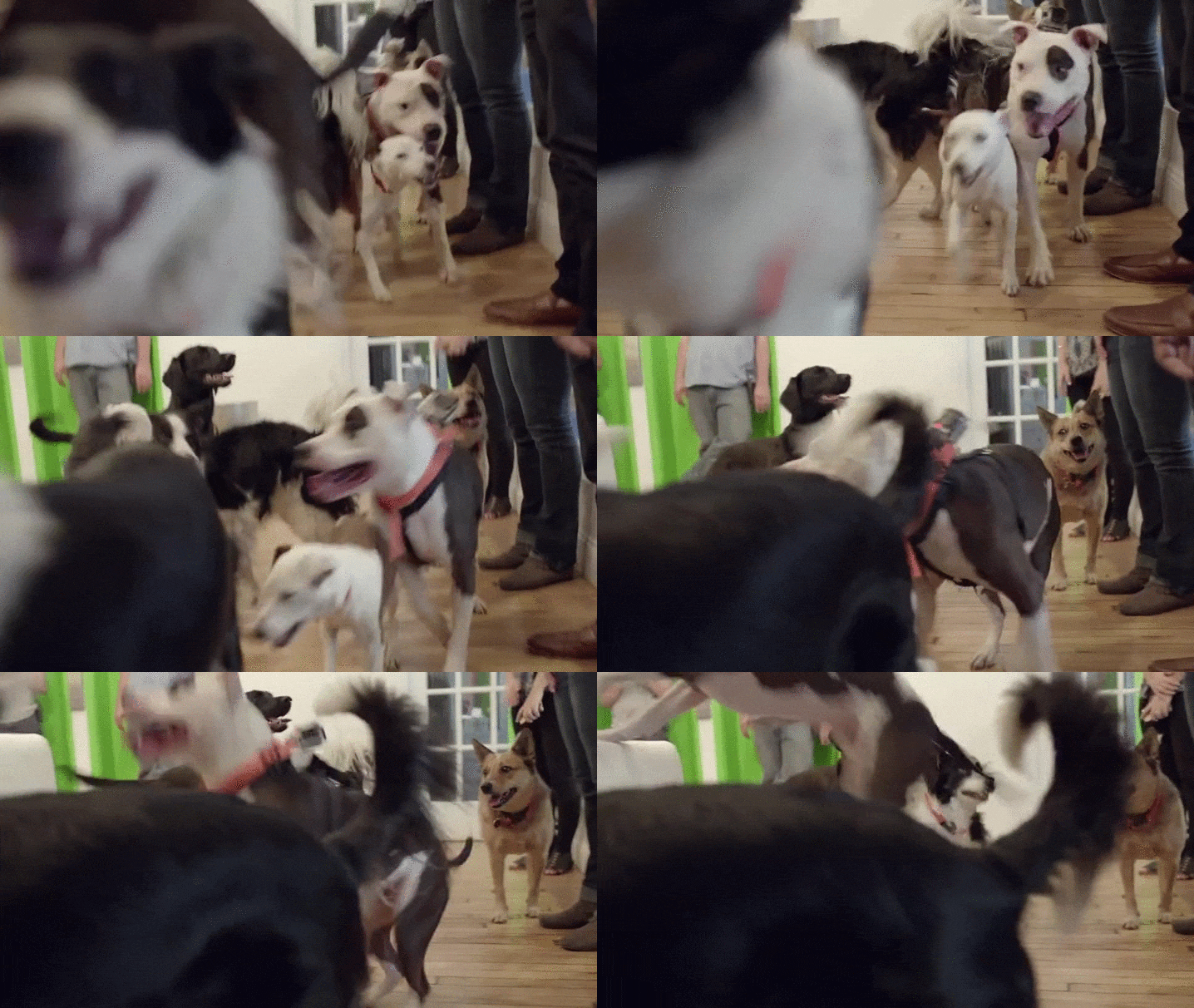
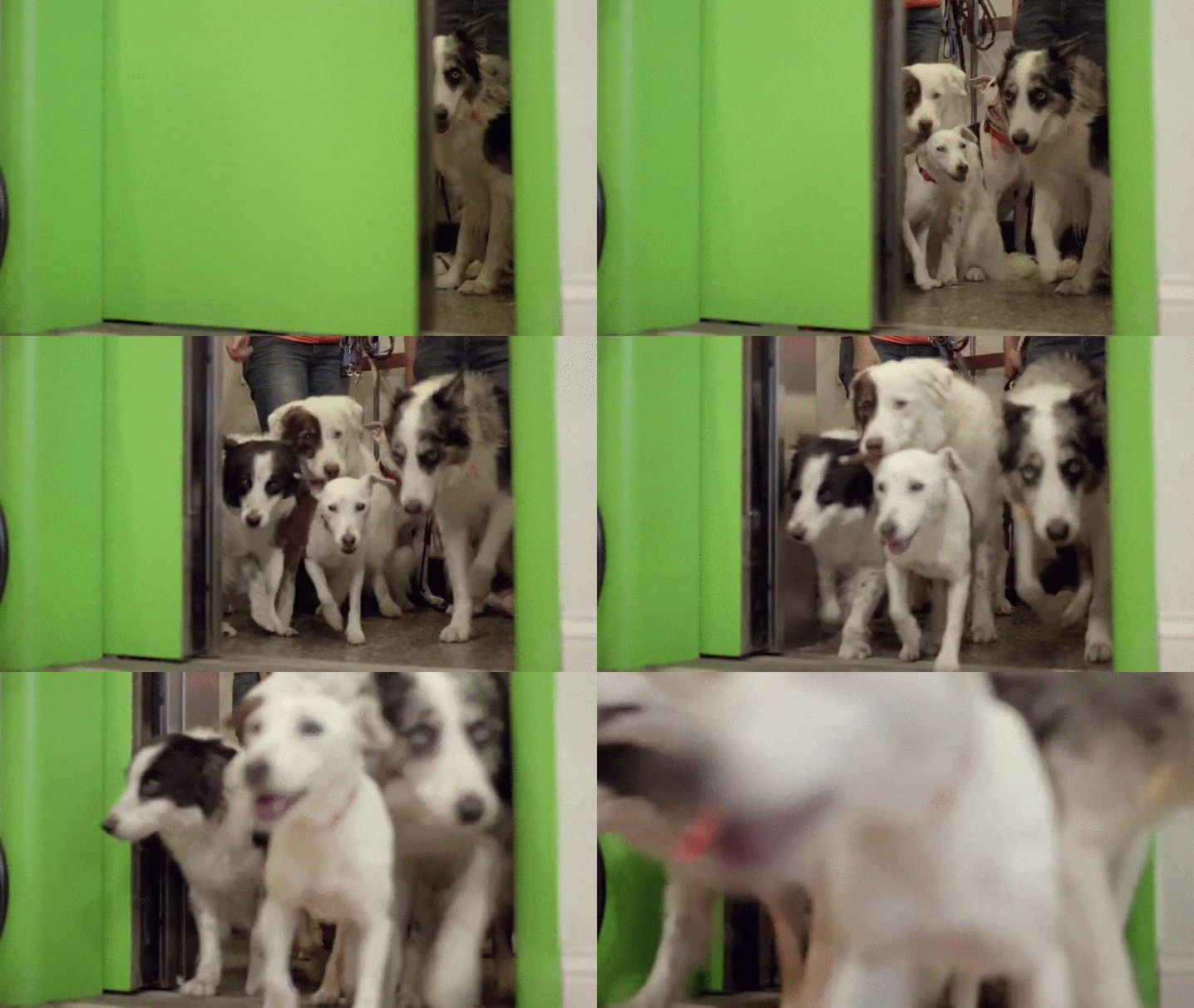
But, of course, the majority of office employees don't get the pleasure of working side by side with dogs on the regular. So the pet food company Dogswell decided to surprise a group of unsuspecting New York City office workers with dogs.

Like, a lot of dogs.


The idea behind this canine ambush was to help alleviate the workers' stress. Here's how it went down: The Dogswell team pretended to be a news crew planning to interview everyone about stress in their workplace.

Then they arrived and unleashed the dogs.


Most of the pups just ran around giving out kisses and demanding belly rubs, but some actually made themselves useful around the office.


And then guess what happened?
Nobody. Could. Stop. Smiling.


Kind of hard to be stressed when you're surrounded by so many fluffy little goofballs.

Watch the full video here:


Click here for the original article.


How to Recognize Animal Abuse and knowing when to intervene as a veterinary professional


By Stephanie Duncan


"Animal cruelty is an unfortunate, horrific reality involving innocent beings that are unable to speak up for themselves. Veterinary professionals have a moral, ethical and, in some states, legal obligation to be the voice for these victims.

Animal cruelty is a catchall statement for offenses that include neglect, abuse, abandonment, animal fighting and even practicing veterinary medicine without a license. State laws vary in whether animal cruelty is deemed a misdemeanor or a felony, and they even go so far as to detail which animals are included. For example, New York laws cover "every living creature except a human being," while in Alaska, protected animals include vertebrates but not fish.

Veterinarian's Obligation

Several states have laws in place that address the issue of veterinarians reporting suspected animal cruelty and abuse. These include Arizona, which outlines a veterinarian's duty to report suspected canine participants of dog fighting. Oregon makes it mandatory for veterinarians to report aggravated animal abuse. Additionally, Kansas requires veterinarians to report cruel or inhumane treatment, and failure to do so could result in disciplinary action.

Because laws vary from state to state, it's vital that veterinarians review local and state animal cruelty laws.

A veterinarian's role in animal cruelty cases is to be the medical expert and not the prosecutor, judge and jury. Thomas Skadron, DVM, owner of Skadron Animal Hospital in West St. Paul, Minn., and a Veterinary Hospitals Association board member, had a suspected cruelty case in which local law enforcement asked that he get involved.

"The dog that came in had a broken femur, and we donated the fracture repair via intramedullary pins as opposed to amputation or euthanasia," he said. "In this case, it meant the difference between being treated and not being treated.

Identifying Cruelty

In some cases, cruelty is obvious because of the type of injuries suffered. Others are subtle and characterized as behavior issues.

-Neglect: Signs may be seen not only in the pet but in the owner's behavior as well. The client might exhibit a lack of concern for the animal's welfare, refuse treatment, workups or grooming, or decline euthanasia. The animal might present with a poor body condition or severely matted fur, or it may have indications of being left unattended and continually chained up. These animals might not have access to adequate shelter, food or water, and the owner may have an excessive number of animals.
-Hoarding: Animals kept in hoarding-like conditions often are seen for trauma or preventable contagious and parasitic diseases. the owner may visit several clinics so as to not raise suspicion. A veterinarian may want to check with nearby practitioners to see whether the same owner is arriving with different patients.
-Dog Fighting: Animals used in dog fighting have characteristic bite and scar patterns in sensitive areas, including the head, neck and legs. Owners may try to treat the injuries themselves, and they may be reluctant to explain how the animal was hurt. The animal might be missing body parts, such as an ear or tail.
-Intentional Injuries: Deliberate harm is inflicted on an animal when an owner or someone else intentionally causes pain or injury. The pet comes in with injuries not consistent with its history, or the injuries are too severe to support the client's story. The pet may display abnormal behaviors such as relaxing when the owner is out of the room or shying away from the client.

It's important to keep in mind that good Samaritans exist. These individuals may find a neglected, abandoned or wounded animal and bring it to the clinic.

Justine Lee, DVM, Dipl. ACVECC, Dipl. ABT, of Animal Emergency and Referral Center of Minnesota and the CEO and founder of VETgirl, recalled a disturbing case:

"An emaciated pit bull, who normally should have weighed 50 to 55 pounds, was brought in. This dog weighed less than 30 pounds. It was obvious animal cruelty, and I was thankful it was a neighbor that physically brought the dog and owner in and had the owner surrender the dog to us to address its medical needs. We were able to find a foster and rescue organization to care for the dog, allowing it to be rehomed."

What Can You Do?

Clinic owners should have an animal cruelty plan in place, and the team should be fully trained on standard operating procedures.

-Know your local and state laws. Each state is different, including whether suspected animal cruelty must be reported and if veterinarians are offered any protection.
-Know who needs to be contacted - whether local law enforcement or animal control - and the specific individuals within those organizations.
-Establish an in-house policy that details which samples to obtain, questions to ask, diagnostics to run and reporting forms to compete. The American Veterinary Medical Association offers a document, "Practical Guidance for the Effective Response by Veterinarians to Suspected Animal Cruelty, Abuse and Neglect," which includes sample reporting forms and protocols that clinics can use.

When an owner brings in a pet and the veterinarian or staff on call suspect cruelty, it's important to keep calm and avoid jumping to conclusions. The first step is to gather as much information as possible and ask open-ended questions such as, "How and when did this happen?" and "Who was involved?"

Dr. Skadron and his team approach suspected cruelty carefully because incorrect assumptions could be highly offensive to the owner. He suggests reviewing the patient's history, whether the injuries match the story, and whether the animal has behavioral or biting issues.

As you assess and treat the patient, document and take samples as thoroughly as possible. Keep in mind that veterinarians are not permitted to hold animals or perform treatment without owner consent. The owner could argue that treatments or diagnostics are too costly; however, there are workarounds. Skadron believes his team should be in a position "to do anything we can in these situations to help the pet, even if it means a donation of hospital resources and offering a new home."

Once the pet is assessed, review the owner and the owner's behavior. Was he indifferent or concerned about his pet? Did she want to pursue medical treatment or did she decline? How does the pet react and respond to the owner? These little warning signs can make a difference in an animal cruelty case, and it's important to remember and document them all.

Dr. Lee treated a dog that was paralyzed when hit by a car, and the owners' indifference to the pet's poor prognosis and potential suffering was a red flag.

"The owners took their dog home against medical advice, and after multiple follow-up phone calls to check on the dog, I discovered they never sought veterinary care afterwards despite recommendations," Lee said. "I checked with hospital management to see if there was a specific policy and ended up utilizing the local animal humane society to direct my animal cruelty report to."

Once the exam is complete and treatment is administered, veterinarians have the choice to educate or report. Is the cruelty happening because of the owner's lack of knowledge? If so, it could be accidental and the behavior could be changed with education. For example, if the pet comes in severely matted, with overgrown nails and ear mites, educating about recommended grooming could rectify the situation. However, if the pet continually comes in with matted hair, overgrown nails and ear mites despite education, referrals and recommendations, it might be time to report the case as animal cruelty.

In many cases, veterinarians may be concerned about getting someone in trouble, preserving client relationships and an ever-present fear: What if I'm wrong?

Lee encourages veterinarians to follow professional recommendations.

"For me, I found my best avenue and approach is to contact the local humane society and escalate the situation to an appropriate agent who can check on the welfare of the pet," she said. "Likewise, one can call the police if they believe the situation is severe enough. We must be an advocate for animals who don't have a voice."

Many states - Arizona and Oregon among them - offer immunity from civil or criminal liability if a report is made in good faith. It's critical that clinic owners, veterinarians and the staff understand local and state regulations regarding liability and good-faith protections.

Beyond Animal Cruelty

Animal abuse may signal that something is wrong within the owner's family and that other trouble is occurring.

"It's important to realize that when there's abuse to an animal there may be abuse to a child or spouse," Lee said.

During her time in Philadelphia, Lee treated an iguana that had been maliciously thrown against a wall. The pet was brought in by a mother and her child. The child had a black eye. Researchers have confirmed that animal cruelty can co-occur with spousal, child and elder abuse.

In other scenarios, animal cruelty can be a sign of mental illness.

Lee treated an English bulldog with a fractured leg that needed surgical correction. Weeks later, the owner brought in the same dog because of trauma to the spleen and secondary hemoabdomen. That's when Lee alerted management because of the possibility that the client suffered from Munchausen by proxy syndrome, a rare form of animal cruelty in which the owner seeks attention through injuring the animal.

Call in the Feds

Animal cruelty is a serious offense, one that veterinarians are at the front line to combat. The FBI has escalated animal cruelty to be a Class A felony, part of the same grouping of violent crimes that include homicides and assaults. The FBI also tracks cases to learn more about the correlation between animal cruelty and other crimes. In addition, states are considering publishing - or already publish - registries of animal cruelty offenders to further prohibit repeated offenders from owning anymore animals."

Click here for the original article from 
Veterinary Practice News.


Thursday, May 19, 2016

Pets in Vehicles

"Every year, hundreds of pets die from heat exhaustion because they are left in parked vehicles. We've heard the excuses: "Oh, it will just be a few minutes while I go into the store," or "But I cracked the windows..." These excuses don't amount to much if your pet becomes seriously ill or dies from being left in a vehicle.

The temperature inside your vehicle can rise almost 20 degrees F in just 10 minutes. In 20 minutes, it can rise almost 30 degrees F and the longer you wait, the higher it goes. At 60 minutes, the temperature in your vehicle can be more than 40 degrees higher than the outside temperature. Even on a 70-degree day, that's 110 degrees inside your vehicle!

Your vehicle can quickly reach a temperature that puts your pet at risk of serious illness and even death, even on a day that doesn't seem hot to you. And cracking the windows makes no difference.

Want numbers? An independent study showed that the interior temperature of vehicles parked in outside temperatures ranging from 72 to 96 degrees F rose steadily as time increased. Another study, performed by the Louisiana Office of Public Health, found that the temperatures in a dark sedan as well as a light gray minivan parked on a hot, but partly cloudy day, exceeded 125 degrees F within 20 minutes. 


This study also found that cracking the windows had very little effect on the temperature rise inside the vehicle. This is definitely a situation where "love 'em and leave 'em" is a good thing. Please leave your pets at home when you can... they'll be safe and happily waiting for you to come home.

...but wait, there's more!

The risks associated with pets in vehicles don't end with heatstroke. Just as you should always wear your seat belt to protect you in case of a collision, your pet should always be properly restrained while in the vehicle. That means a secure harness or a carrier. 

A loose, small pet could crawl down in the foot well, interfering with use of the brake or accelerator pedal. A small pet sitting in your lap could be injured or killed by the airbag or could be crushed between your body and the airbag in a collision, and a large pet leaning across your lap can interfere with your view of the road and can be injured by the air bag in a collision. Unrestrained pets could be thrown out or through windows or windshields in a collision. And not only could your pet be injured in the collision, but it might also increase your risk of collision by distracting you and taking your attention away from where it should be - on the road.

To learn more about the importance of restraining your pets, visit Paws to Click.

Most of us smile when we see a dogs face happily hanging out a window, digging the ride and the smells wafting on the breeze, but this is a very risky venture for the dog for three reasons. One, it means your dog isn't properly restrained - and we've already told you why that's so important. Two, your dog is at high risk of eye, ear, face, and mouth injury from airborne objects when it's got its face hanging out the window. Three, letting your dog hang any part of its body out of the window increases the risk that (s)he could be thrown out of the vehicle during a collision, lose its balance and fall out of the open window during an abrupt turn or maneuver, or jump out of the vehicle to threaten another dog or a person.

And let's not forget the severe dangers of driving with your dog in the bed of a pickup truck. Dogs can fall or jump from the truck bed and be injured or killed on impact, or be struck by other traffic. And just as letting your dog hang its head out of the window puts it at risk of injury from debris, a dog in a truck bed is even more exposed to airborne hazards. Using an appropriate-length tether may reduce the risk that your dog will exit the truck bed, but the tether could tangle, injure, or even choke your dog. If you must transport your dog in the bed of a pickup truck, sue a secured and appropriately sized and ventilated dog kennel. 
(For more information, read out Dogs Traveling in Truck Beds literature review)

Before you put your pet in the vehicle, ask yourself if you really need to take your pet with you - and if the answer is no, leave your pet safely at home. If you must take your pet with you, make sure (s)he is properly restrained so the trip is as safe as possible for both of you."

Click here for the original article.


Wednesday, May 18, 2016

Why Ticks Threaten the Entire Pet-Owning Family

By Steve Dale from Veterinary Practice News

"If a dog is diagnosed with Lyme disease, veterinarians should talk to the clients about getting tested themselves.


One Health isn't just talk any longer. It all began a couple years ago with the people dressed in green. Some wore homemade tick costumes as they marched down Michigan Avenue in Chicago chanting "Let's fight Lyme!" It was quite a sight.

I host a pet show on WGN Radio, and the studios are nearly like a "Today" show setup - facing Michigan Avenue and a concrete area called Pioneer Court, where the 50 or so marchers gathered. Hoping to gain radio attention, it's not unusual for groups to stop there.

Before my pet show began, I was sitting in with another host who asked the group on live radio, "Why are you here?" They spoke about Lyme disease and why awareness is important.

As we continued chatting, they were amazed that I knew so much about tick diseases. I explained, "It's because I attend veterinary conferences."

At a news break, I went outside to talk with them further. They showed me images and video from their phones of relatives whose lives have been altered as a result of a bit from a tick. Some were children. 

I was touched and moved to tears.

That's when I realized that we might be able to do more to protect our dogs from tick disease than we can ourselves.

People don't wear tick collars, snack on chewable tick protection or apply spot-on products on our backs. And, at least so far, a Lyme vaccine for people isn't available.

I thought: If a dog is diagnosed with Lyme or any other tick disease, family members likely have been on the other end of that leash, sharing the same environment.

Also, children may be more susceptible to tick bites. Like dogs, they're close to the ground, and they might be more likely to run into bushes or other places where ticks hang out. Very small ticks may not even be noticed, as children pay no attention, and mom and dad may not be checking carefully.

As the Companion Animal Parasite Council notes, the prevalence of tick disease in dogs is on the rise and spreading. Veterinary parasitologists have told me that the problem is an epidemic. 

It doesn't matter what we call it. Tick disease is here, and it affects people and dogs.

In the spirit of One Health, I thought that each time a veterinarian diagnoses tick disease in a dog, a suggestion should be for family members to see a physician. After all, someone was at the other end of that leash sharing the same environment.

Similarly, if a pediatrician diagnoses tick disease, the doctor might ask if there's a family dog. If the answer is "yes," then a visit to a veterinarian is a good idea.

Dr. Natalie Marks in Chicago did just that. She diagnosed Lyme in a dog and gently suggested that the owner see her doctor, despite the fact that she said she felt fine.

Thankfully she listened to Dr. Marks. The dog's owner was diagnosed with Lyme disease. And, like most illnesses, early diagnosis is helpful.

Of course, we don't get tick disease from dogs. Ticks are the "bad guys" sharing their nasty pathogens equally with people and their pets.

I am proud to announce the launch of a One Health Initiative called Stop Lyme.

Dr. Ron DeHaven, AMVA's CEO agreed: "More today than ever, we live in the same environment as our pets, and this can be especially true for our children. Hence disease that might affect our pets could also affect our children. If Lyme disease is diagnosed in a child, it's very possible that the family dog also has been exposed, and vise versa."

"By focusing on disease in animals, we can impact human health as well," he continued. "this is the basic concept of One Health - that the health of people, animals and the environment are inextricable linked. This also is consistent with our mission statement at AVMA: 'The mission of the association is to lead the profession by advocating for its members and advancing the science and practice of veterinary medicine to improve human and animal health."

"It's vital we work alongside physicians to enhance the understanding of diseases affecting human and animal patients," he added.

 Attempting to better understand tick disease in people and in pets, I've attended several sessions where veterinarians and physicians share a stage, including the One Health Zoobiquity initiative event.

Clearly, the approach for diagnosing and treating tick disease in dogs compared to people might be different, so there is a gap to bride. And I realize that dogs aren't people.

Still, ticks don't care much about any of that. And not only is tick disease likely on the rise, but parasitologists (human and veterinary) agree that some pathogens infecting dogs and people probably haven't been discovered yet. Yuck. And that's kind of scary.

What appears abundantly clear to me is that public awareness and education about tick diseases will help people and dogs.

"I don't believe tick disease is talked about enough in the media," Marks said. "And oftentimes, when it is talked about there's misinformation. This is a huge opportunity to inform people so they can more effectively protect all their family members - those with two legs and four."

Merck Animal Health is supporting this campaign, but it's not so much about selling product as it is about doing what's right. Here's what I mean: While attending WVC in Las Vegas, I met a veterinary technician from upstate New York, and we were chatting about my idea to launch this One Health campaign. She began to weep.

"I love being a veterinary technician," she said. "But I may have to leave my job because I just no longer have the strength. I was diagnosed with Lyme. In some ways, I'm no longer the same person I was. And I've learned that I'm hardly alone."

She hugged me and added, "You definitely will help dogs and, I bet, will do even more to help people."'

Click here for the original article.


Saturday, April 30, 2016

America's PrepareAthon!


America's PrepareAthon! is an opportunity organized by the Federal Emergency Management Agency (FEMA) to help individuals, organizations, and communities prepare for specific hazards (such as earthquakes, wildfires, floods, etc.) through group discussions, drills, and exercises.

The goal of this campaign is to increase
 the number of individuals who:
-Understand which disasters could happen in their community.
-Know what to do to be safe and mitigate damage.
-Take action to increase their preparedness.
-Participate in community resilience planning.

Want to Be Smart, Take Part, and Prepare?

Learn more at the FEMA website!


Friday, April 22, 2016

Earth Day!

"This Earth Day, let's get really 
big stuff done for our planet.

What are we waiting for? 
The time is now."


The Movement Continues.
"We are now entering the 46th year of a movement that continues to inspire, challenge ideas, ignite passion, and motivate people to action. 

In 1970, the year of our first Earth Day, the movement gave voice to an emerging consciousness, channeling human energy toward environmental issues. Forty-six years later, we continue to lead with groundbreaking ideas and by the power of our example. 

And so it begins. Today. Right here and right now. Earth Day is more than just a single day - April 22, 2016. It's bigger than attending a rally and taking a stand. 

This Earth Day and beyond, let's make big stuff happen. Let's plant 7.8 billion trees for the Earth. Let's divest from fossil fuels and make cities 100% renewable. Let's take the momentum from the Paris Climate Summit and build on it. 

Let's start now. And let's not stop."

The History of Earth Day
"Each year, Earth Day -April 22- marks the anniversary of the birth of the modern environmental movement in 1970. 

The height of counterculture in the United States, 1970 brought the death of Jimi Hendrix, the last Beatles album, and Simon & Garfunkel's "Bridge Over Troubled Water." War raged in Vietnam and students nationwide overwhelmingly opposed it. 

At the time, Americans were slurping leaded gas through massive V8 sedans. Industry belched out smoke and sludge with little fear of legal consequences or bad press. Air pollution was commonly accepted as the smell of prosperity. "Environment" was a word that appeared more often in spelling bees than on the evening news. 

Although mainstream America largely remained oblivious to environmental concerns, the stage had been set for change by the publication of Rachel Carson's New York Times bestseller Silent Spring in 1962. The book represented a watershed moment, selling more than 500,000 copies in 24 countries, and beginning to raise public awareness and concern for living organisms, the environment and links between pollution and public health. 

Earth Day 1970 gave voice to that emerging consciousness, channeling the energy of the anti-war protest movement and putting environmental concerns on the front page. 

The Idea
The idea for a national day to focus on the environment came to Earth Day founder Gaylord Nelson, then a U.S. Senator from Wisconsin, after witnessing the ravages of the 1969 massive oil spill in Santa Barbara, California. Inspired by the student anti-war movement, he realized that if he could infuse that energy with an emerging public consciousness about air and water pollution, it would force environmental protection onto the national political agenda. Senator Nelson announced the idea for a "national teach-in on the environment" to the national media; persuaded by Pete McCloskey, a conservation-minded Republican Congressman, to serve as his co-chair; and recruited Denis Hayes from Harvard as national coordinator. Hayes built a national staff of 85 to promote events across the land. April 22, falling between Spring Break and Final Exams, was selected as the date. 

On April 22, 1970, 20 million Americans took to the streets, parks, and auditoriums to demonstrate for a healthy, sustainable environment in massive coast-to-coast rallies. Thousands of colleges and universities organized protests against the deterioration of the environment. Groups that had been fighting against oil spills, polluting factories and power plants, raw sewage, toxic dumps, pesticides, freeways, the loss of wilderness, and the extinction of wildlife suddenly realized they shared common values. 

Earth Day 1970 achieved a rare political alignment, enlisting support from Republicans and Democrats, rich and poor, city slickers and farmers, tycoons and labor leaders. By the end of that year, the first Earth Day had led to the creation of the United States Environmental Protection Agency and the passage of the Clean Air, Clean Water, and Endangered Species Acts. "It was a gamble," Gaylord recalled, "but it worked."

As 1990 approached, a group of environmental leaders asked Denis Hayes to organize another big campaign. This time, Earth Day went global, mobilizing 200 million people in 141 countries and lifting environmental issues onto the world stage. Earth Day 1990 gave a huge boost to recycling efforts worldwide and helped pave the way for the 1992 United Nations Earth Summit in Rio de Janeiro. It also prompted President Bill Clinton to award Senator Nelson the Presidential Medal of Freedom (1995) - the highest honor given to civilians in the United States - for his role as Earth Day founder.

Earth Day Today 
 As the millennium approached, Hayes agreed to spearhead another campaign, this time focused on global warming and a push for clean energy. With 5,000 environmental groups in a record 184 countries reaching out to hundreds of millions of people, Earth Day 2000 combined the big-picture feistiness of the first Earth Day with the international grassroots activism of Earth Day 1990. Earth Day 2000 used the power of the Internet to organize activists, but also featured a drum chain that traveled from village to village in Gabon, Africa. Hundreds of thousands of people gathered on the National Mall in Washington, DC for a First Amendment Rally. Earth Day 2000 sent world leaders the loud and clear message that citizens around the world wanted quick and decisive action on global warming and clean energy. 

Much like 1970, Earth Day 2010 came at a time of great challenge for the environmental community. Climate change deniers, well-funded oil lobbyists, reticent politicians, a disinterested public, and a divided environmental community all contributed to the narrative - cynicism versus activism. Despite these challenges, Earth Day prevailed and Earth Day Network Reestablished Earth Day as a relevant powerful focal point. Earth Day Network brought 250,000 people to the National Mall for a Climate Rally, launched the world's largest environmental service project - A Billion Acts of Green - introduced a global tree planting initiative that has since grown into The Canopy Project, and engaged 22,000 partners in 192 countries in observing Earth Day. 

Earth Day had reached into its current status as the largest secular observance in the world, celebrated by more than a billion people every year, and a day of action that changes human behavior and provokes policy changes. 

Today, the fight for a clean environment continues with increasing urgency, as the ravages of climate change become more manifest every day. We invite you to be a part of Earth Day and help write many more chapters - struggles and victories- into the Earth Day Book."

To learn more about how
 you can contribute
 to Earth Day 2016, check out